

Memoona Does The Big Plastic Count
This year I took part in Everyday Plastic’s ‘The Big Plastic Count’ for the first time. For one week I separated and counted all plastic packaging headed for the rubbish bin, after I had consumed or used the contents.
Here’s what I found.
Firstly, doing the count during Ramadan meant that my snack consumption was lower than it would usually be. But I was still impressed at how much I gave into post-fast sugar cravings!
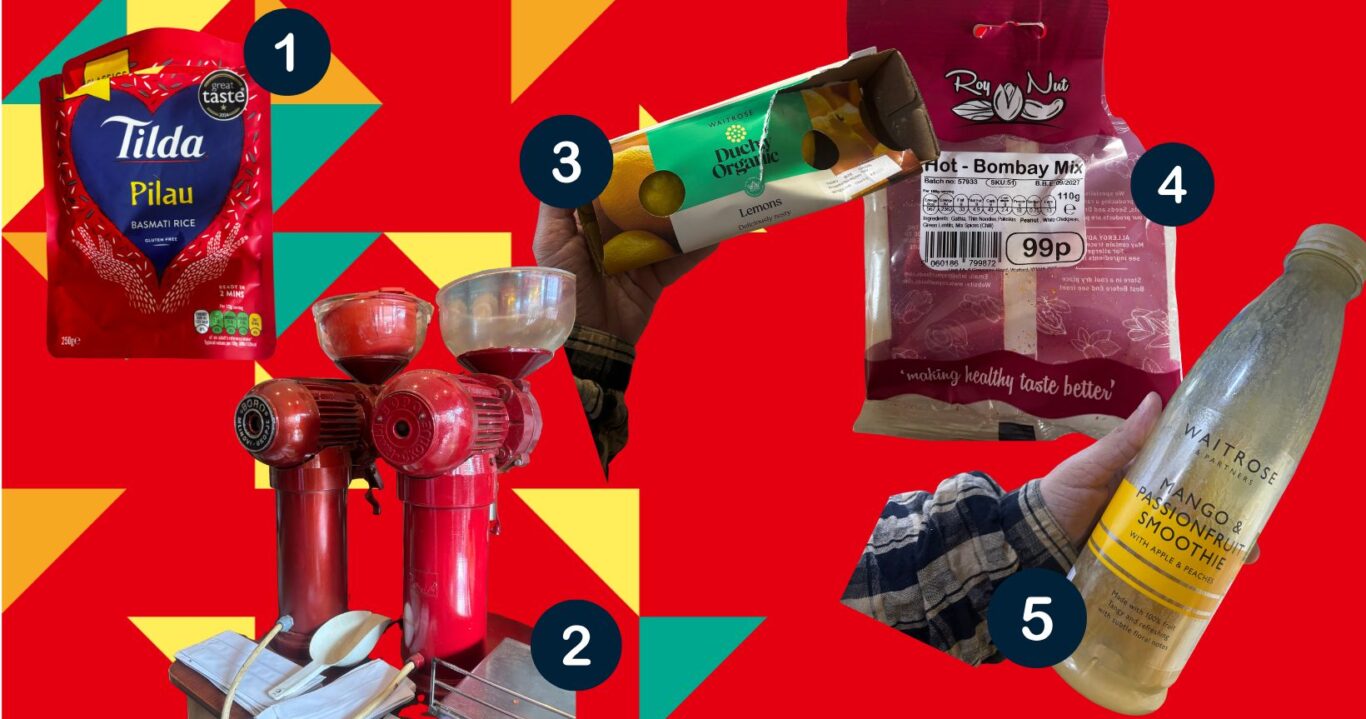
More importantly, I saw a clear link between South Asian foods that I purchased to save time while fasting and my plastic footprint. Ancestral foods like rice that would have been purchased by my grandparents in sacks and containers from local suppliers are now available to purchase in convenient single portion sizes and with that comes the need for more packaging (image 1).
This got me thinking about how my need to optimise time and effort has had a toll on the planet. I had to be radically honest that even though I do have the privilege of time to cook food from scratch, I do sometimes opt for convenience when I see South Asian ready-made food that saves me having to buy multiple spices. I also pondered how the true joy of preparing and eating these foods for me is touching, smelling, and tasting the same spices.
I have been lucky enough to travel to multiple countries and I was reminded during my count of a small food store I visited in North Macedonia last summer (image 2). The owner had an industrial coffee grinding machine and people would bring their emptied coffee packets and buy refills, while catching-up with the store owner. The store was also filled with loose, package-free nuts and dried fruit, as well as locally produced olive oil and honey in mismatched containers. I have seen loose purchase stores in London too but they feel less like community hubs. Of course, the price of food in these stores forms a huge barrier for many people.
Looking through the plastic I counted during the week, I noticed that higher-priced food items (like organic ones), were more likely to be packaged in recyclable materials (image 3). It made me wonder how much of the price I paid goes towards the food and how much goes towards the packaging.
Most of my snack foods were packaged in plastic (image 4), but so were healthier foods like prepared fruit and smoothies (image 5), so microplastics could be present in all of the food groups I ate. The count definitely made me more conscious of trying to buy loose fruit where possible going forward.
Counting my plastic for a week was a really eye-opening exercise that made me aware of my own footprint, but also where I am swapping health and joy for convenience.
If you’re interested in joining the official count this year, you can join thousands of other people from households, schools and communities across the UK who will be counting their plastic from 9 to 15 March. Here is the link to join.
– Memoona Khan – Global Learning London Associate

